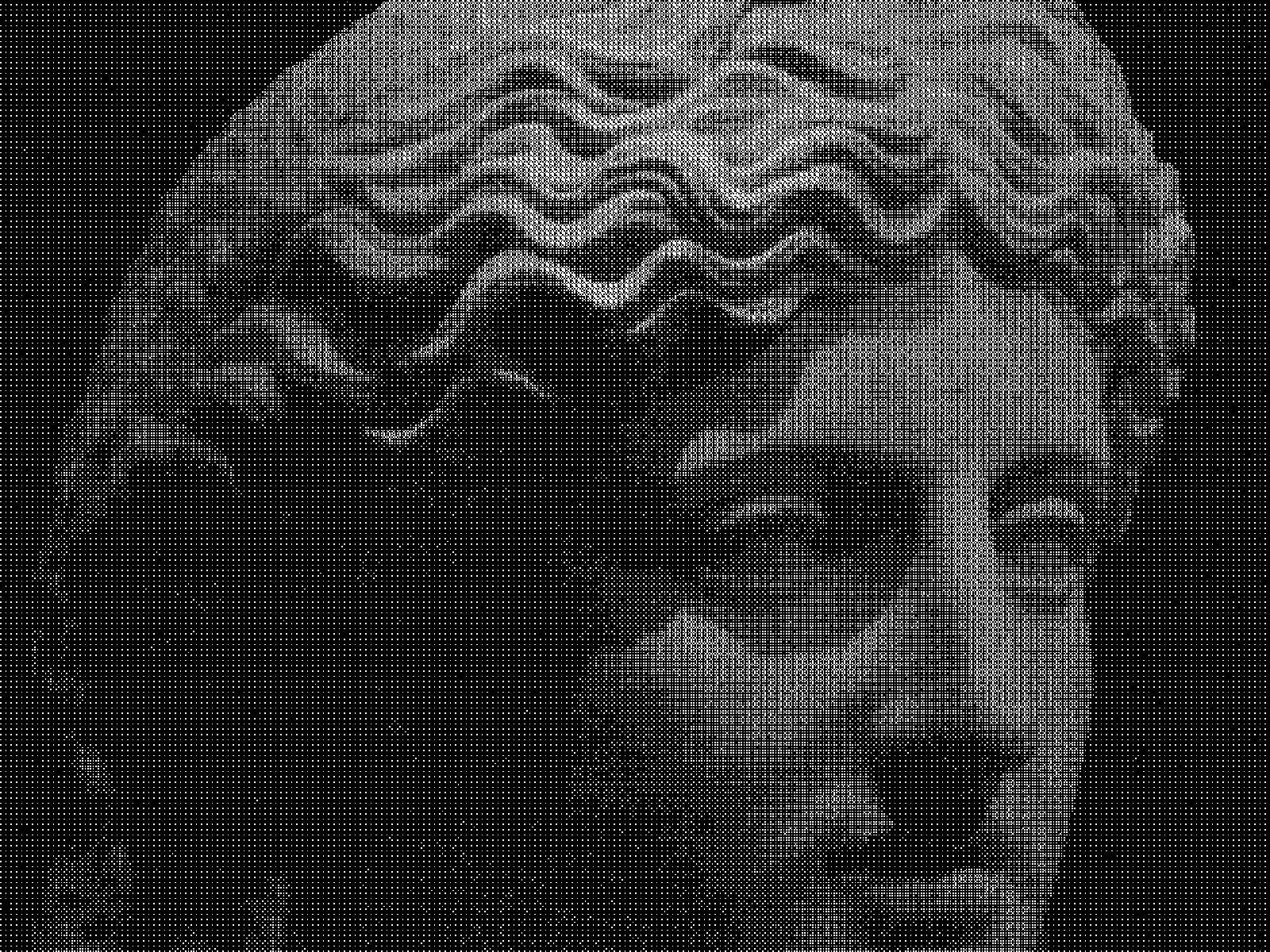
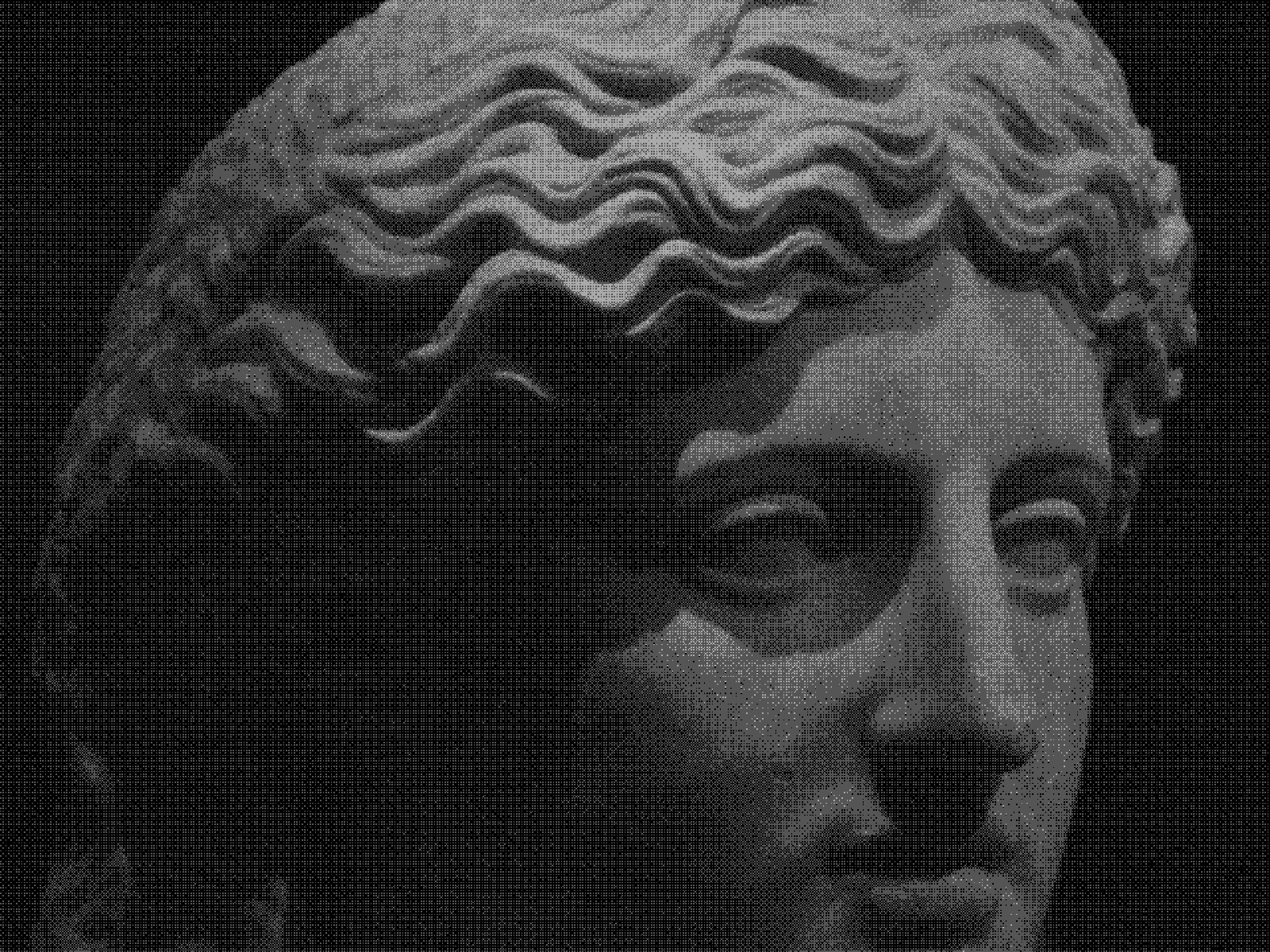
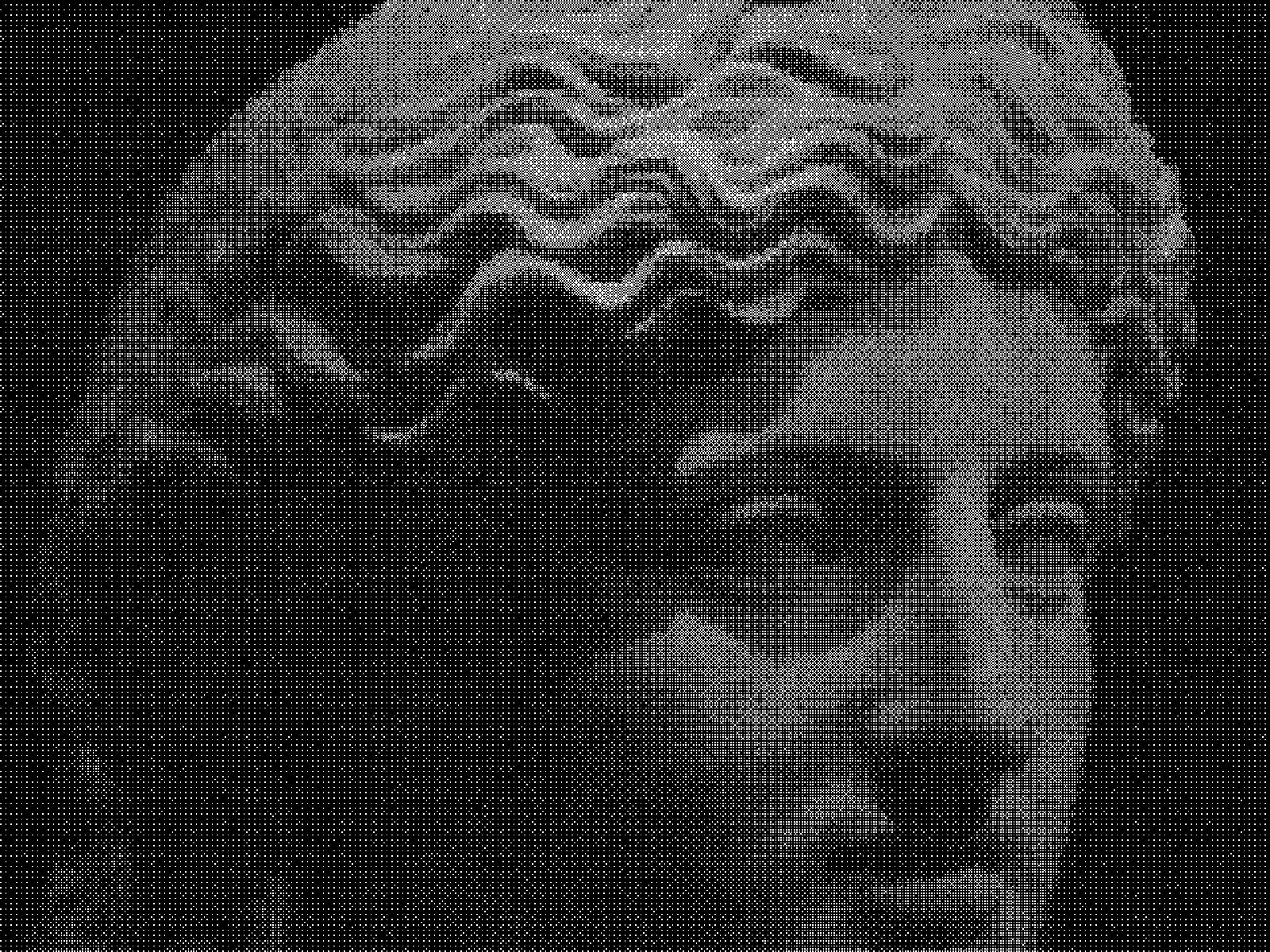
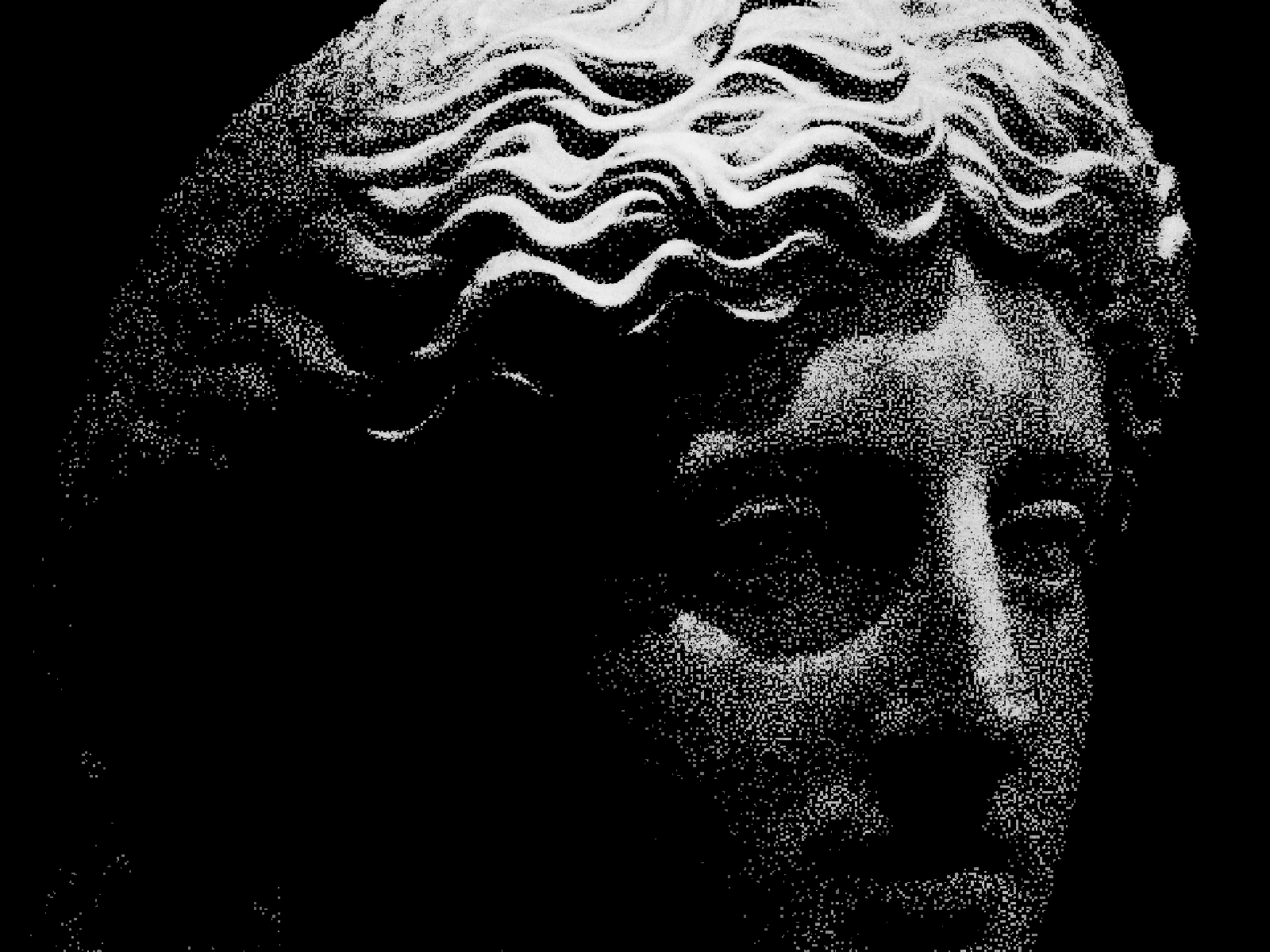
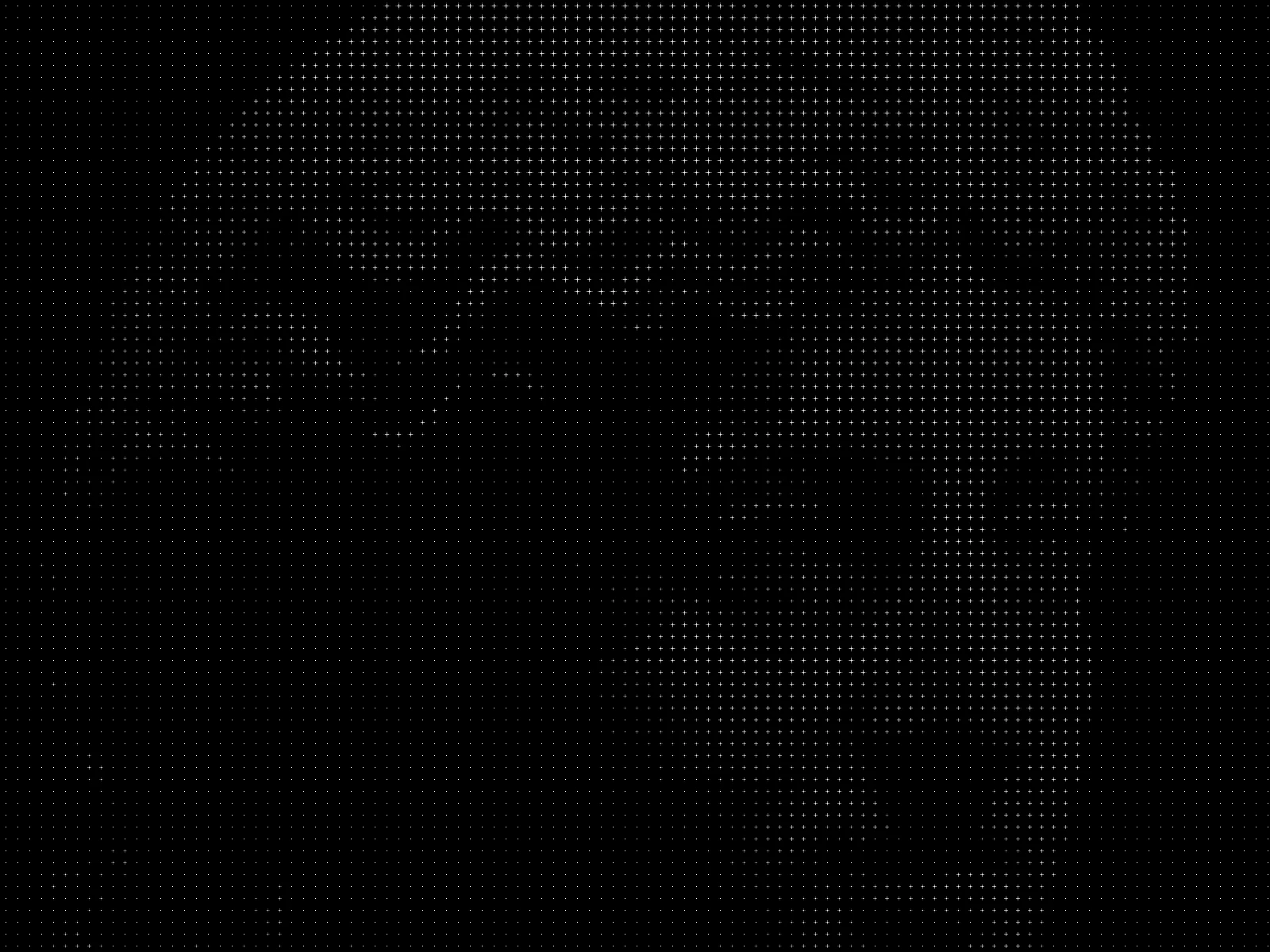
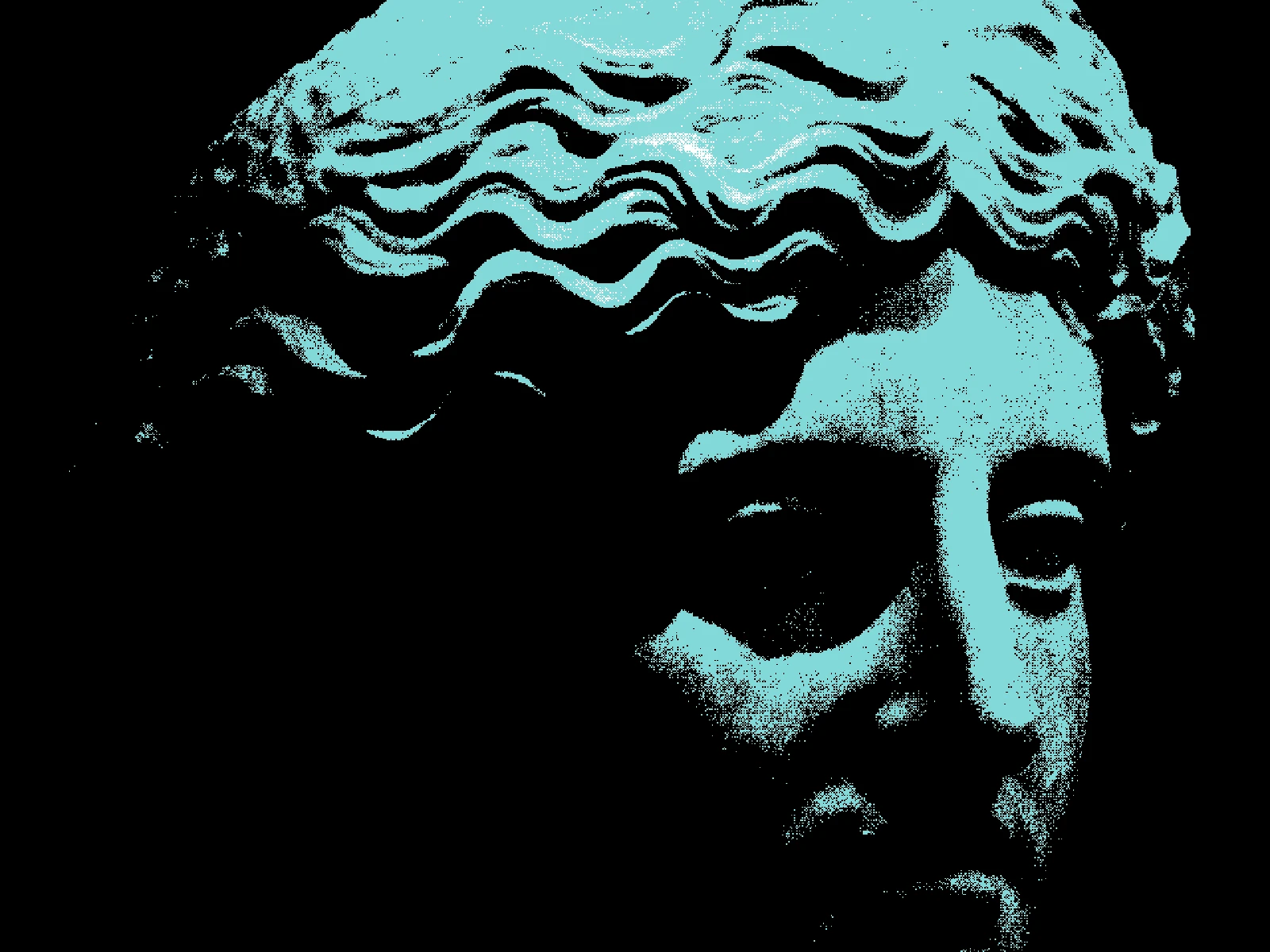
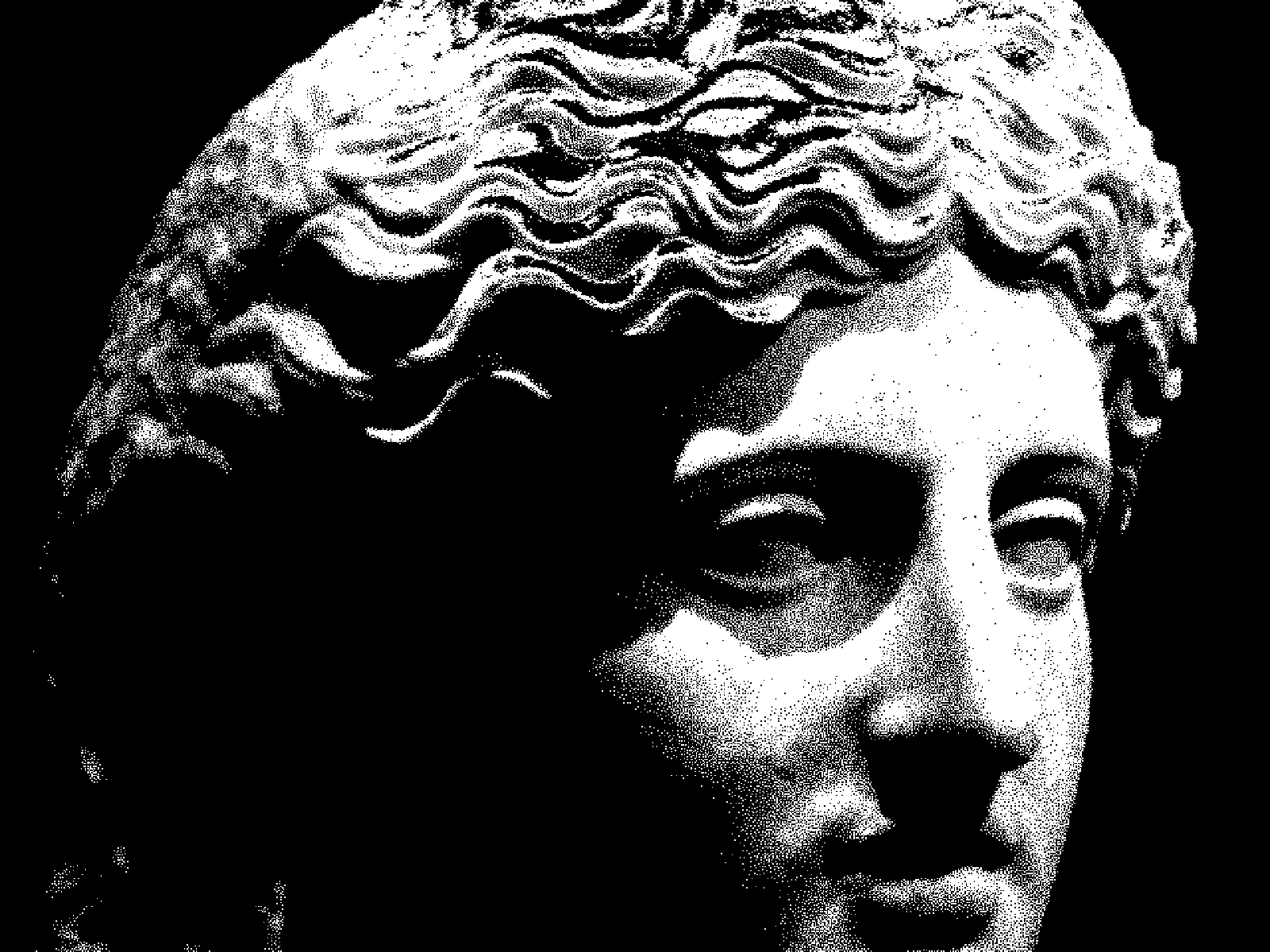
dithering effect
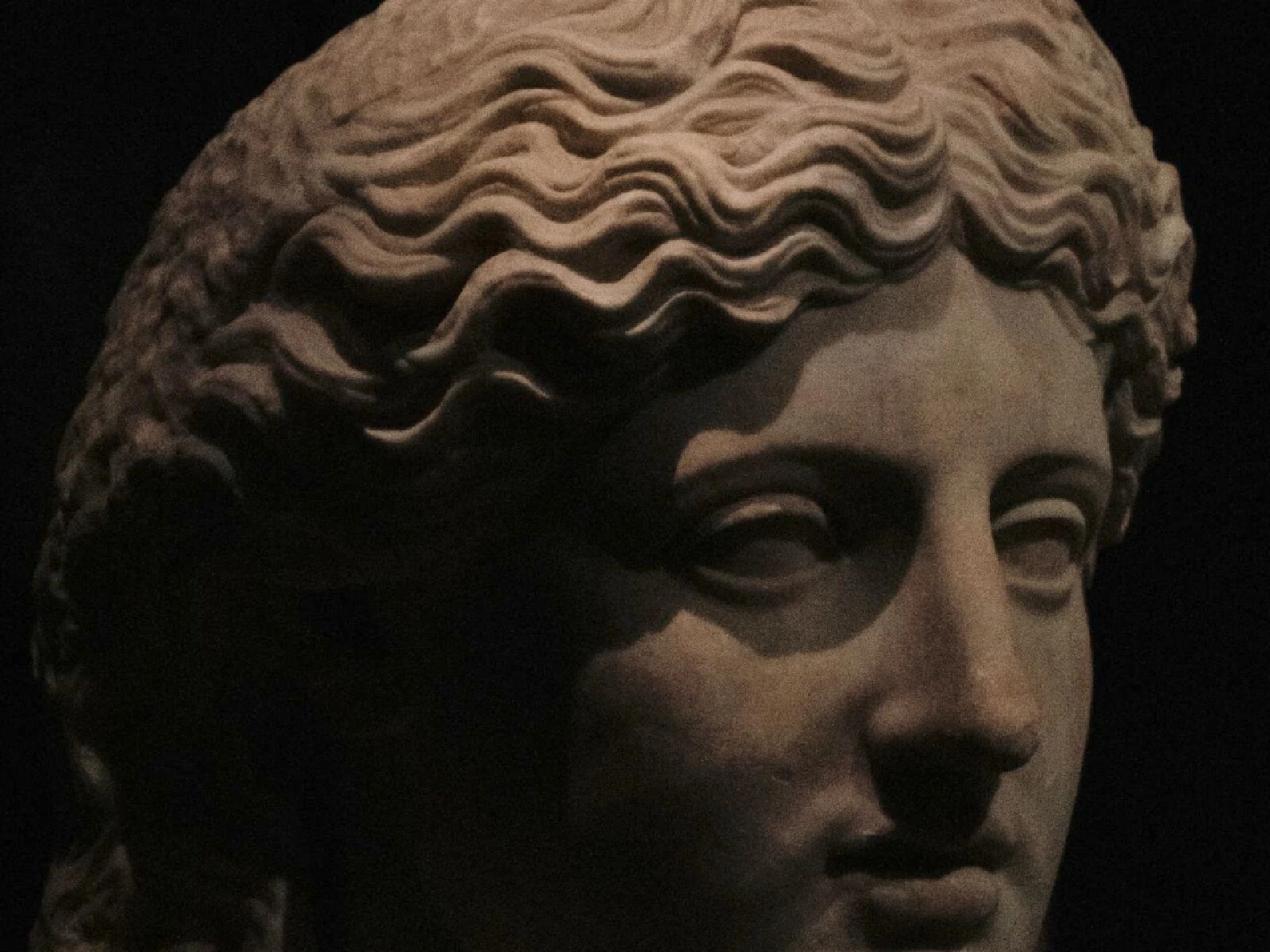
 SourceEffect
01/ ORIGIN
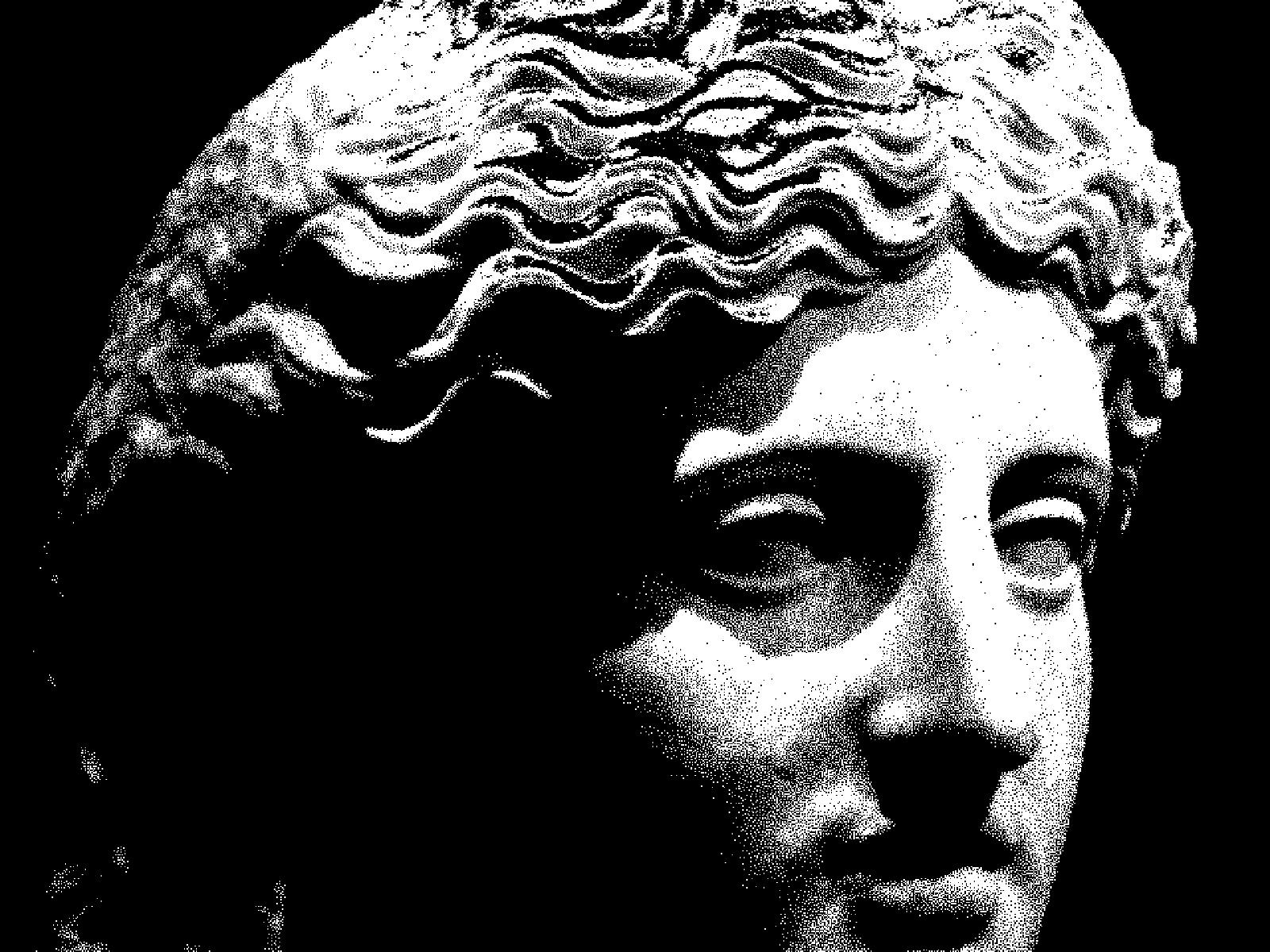
Error diffusion was described by Robert Floyd and Louis Steinberg in a 1976 paper, and their name still sits on the default matrix. It solved a problem every device had: screens and presses could give you one bit per pixel, and photographs are not made of one bit. Bill Atkinson wrote his own variant for the first Macintosh in 1984, which is why that machine's images have their particular blown-out look. The algorithm outlived the constraint and became a texture people choose.
02/ SWEEP
PIXEL sweep
03/ SPEC
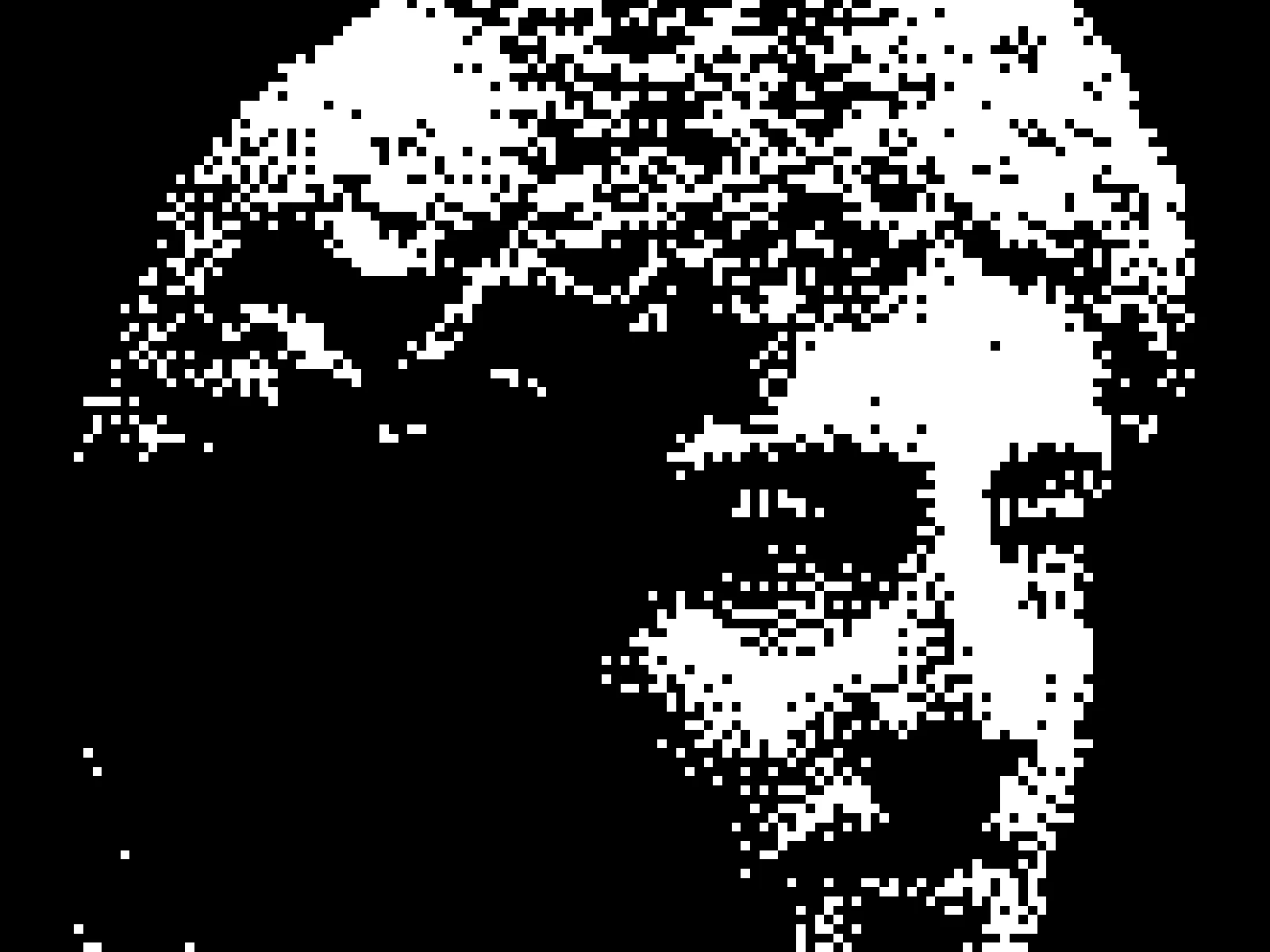
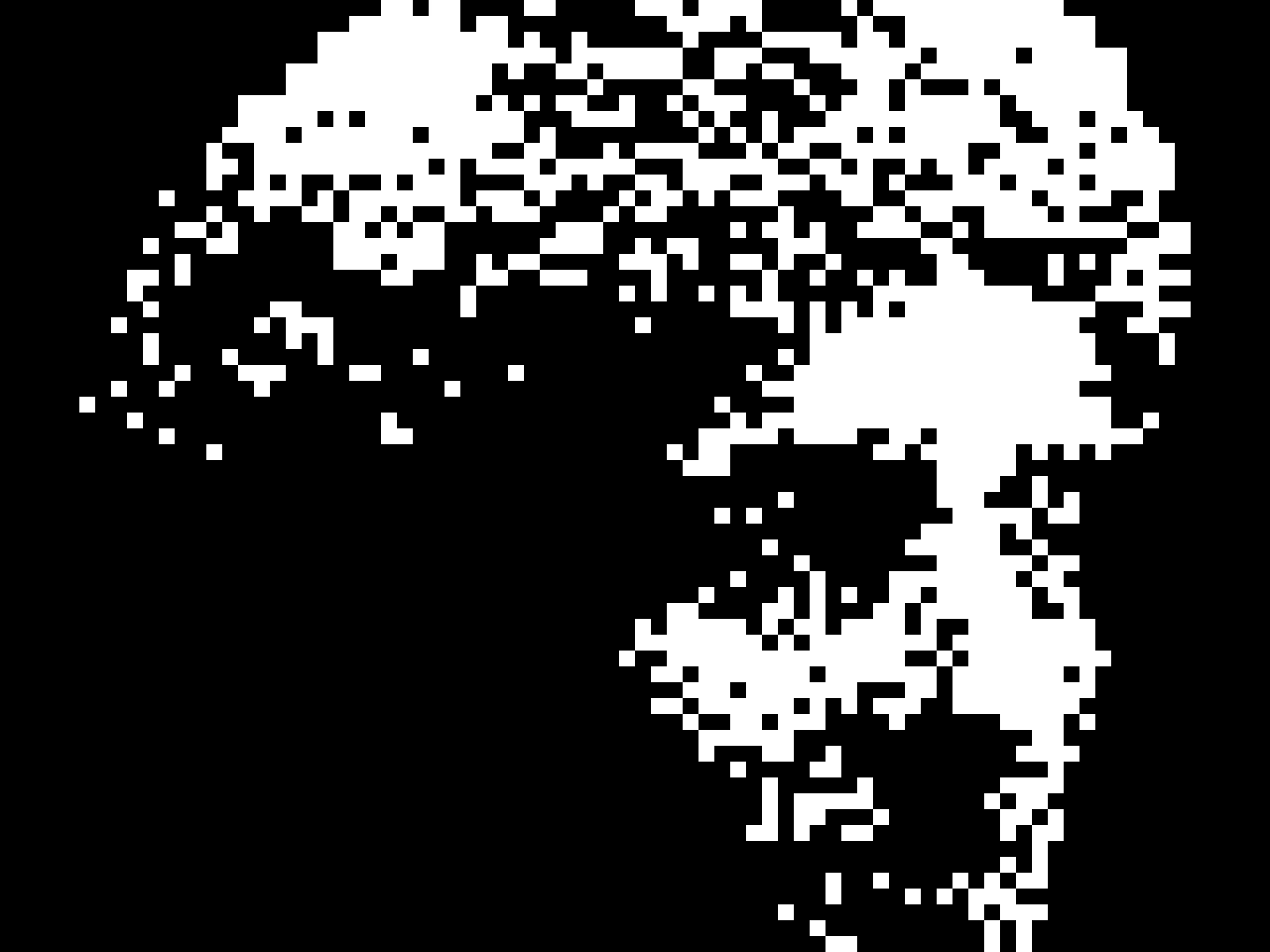
Error-diffusion dithering converts an image to one bit per channel by carrying the quantisation error of each pixel forward onto neighbours not yet processed, so local averages preserve the original tone. KERNEL selects the distribution matrix: FLOYD, ATKINSON, JARVIS, STUCKI, SIERRA or BURKES. Atkinson propagates only part of the error and blows out highlights; the wider matrices give smoother gradients at some cost in sharpness. PIXEL scales the grain from 1 to 12 pixels, default 1, and is the control with the most visible effect. THRESHOLD and CONTRAST shift the black-white balance before quantisation. This effect is central to kott and the free plan covers eight of the dither family.
04/ FAQ
- What is dithering?
- Dithering converts an image to a small number of colours, often just black and white, by carrying the rounding error of each pixel onto its neighbours so local averages preserve the original tone.
- What is Floyd-Steinberg dithering?
- Floyd-Steinberg is the error-diffusion matrix published by Robert Floyd and Louis Steinberg in 1976. It spreads each pixel's error across four neighbours and leaves a fine diagonal grain. It is kott's default KERNEL.
- Which dither KERNEL should I use?
- FLOYD for a neutral fine grain, ATKINSON for blown-out highlights and an early Macintosh look, and JARVIS, STUCKI, SIERRA or BURKES for smoother gradients at some cost in sharpness.